


When Vacation Rentals Feel Like Neighbors
Tourism works best when operators, hosts, and destination leaders align around shared expectations and respectful behavior. This article shows how simple, everyday actions can build trust, reduce friction, and improve the visitor experience across any community.
Every destination, city, town or village has its own rhythm.
You can hear it in the cafés, feel it on a quiet residential street, and see it in the way locals move through their day. Vacation rentals live inside that rhythm. These short-term rentals, often called STRs, sit beside families, small businesses, and neighbors who shape the character of a place.
This article is for hosts and destination leaders who want less friction on the block and more shared benefit from visitors. And for residents, it offers a path to quieter, more respectful tourism right where they live. Because at a time when many communities are rethinking how much tourism feels “right,” how STRs behave in neighborhoods matters more than ever.
A growing body of research and real-world experience suggests that a rental can either add tension to daily life or ease it. In most cases, the difference comes less from the structure itself and more from how the host operates it. The expectations they set. The clarity they offer. The guidance they provide about the place visitors are entering.
Not every neighborhood impact is solved by good behavior. But behavior is the part hosts can own today. And it shapes more of the visitor experience than many people realize.
Honesty. Harmony. Helpfulness. These behaviors create the quiet infrastructure of a trustworthy destination.
Hosts Shape the First Welcome
A trip begins long before a guest arrives. Studies on home sharing show that early touch points help shape how visitors feel about the entire destination. Clear instructions. Timely replies. A warm tone. These signals influence a guest’s emotional baseline before they even step out of the car.
When guests know what to expect, they arrive calmer. When communication feels human, visitors interpret the destination as more organized and welcoming. And when check-in is simple, everything around it feels smoother.
For hosts, this is influence.
For DMOs, it is leverage.
For communities, it is relief.
A consistent first welcome reduces friction, supports destination alignment, and lays the foundation for better reviews and steadier guest behavior.
Trust Grows Through Everyday Behavior
Most frustrations with vacation rentals do not come from the idea of hosting guests. They come from everyday disruptions. Noise that feels out of place. Trash on the wrong day. Parking congestion. A sense that the rhythm of the street shifted without warning.
Research across multiple markets shows that when hosts set clear expectations, communicate with neighbors, and help guests understand local norms, tensions often ease. Complaints tend to drop. Residents feel more respected. DMOs receive fewer friction-based emails and calls.
This does not settle broader questions about housing or density. Residents may still have different views on the right scale of tourism. But consistent, respectful behavior is a baseline they can feel, and it influences how willing a community is to stay engaged in tourism conversations.
Many hosts already practice this daily. Their neighborhoods feel the difference.
Visitors Support Local Life
Spending research often shows a positive pattern. When guests stay in vacation rentals, they support small businesses beyond the main commercial corridors. They buy pastries from the corner café. They pick up groceries from local markets. They try restaurants that anchor the daily life of a neighborhood.
Studies in several regions show that increases in STR activity often correlate with higher restaurant revenue and small-business growth, especially in less commercial areas. While not universal, the trend is strong enough for DMOs and chambers to view STR neighborhoods as meaningful micro-economies.
Done well, this is dispersed tourism. It can spread opportunity while avoiding added pressure on the places residents rely on every day.
Guests Review the Place, Not Just the Property
A review of a vacation rental is never only about the home. Visitors talk about the mood of the street, how safe it felt to walk at night, the friendliness of neighbors, and the ease of reaching everyday amenities. These details shape how they describe the destination long after they return home.
Tourism and experience research suggests that when hosts share thoughtful local context, guests often report stays that feel more meaningful and memorable. These stories influence reputation. They guide future demand. And for DMOs, they reveal block-level insights into visitor behavior and resident conditions.
If more reviews mention neighborhood ease, safety, or friendliness, that is an early signal that alignment is improving.
If You Manage a Destination: Alignment Is a Strategic Advantage
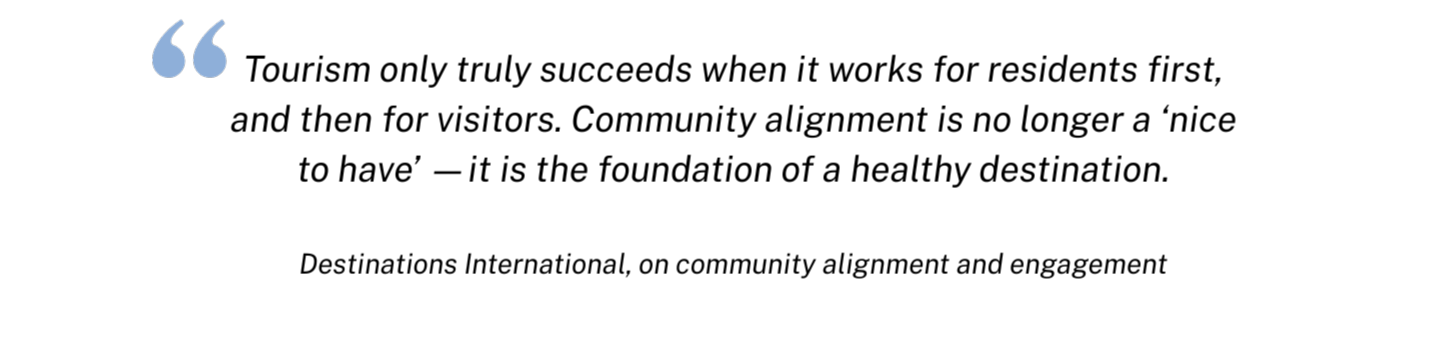
Destinations perform best when every lodging partner sees themselves as co-authors of the visitor experience. STRs become community assets when hosts behave like local businesses and adopt the same clarity residents expect.
For DMOs and chambers, the benefits are concrete:
• Fewer complaint calls and emails
• Cleaner, more consistent visitor messaging
• Better narrative management across lodging types
• More accurate block-level intelligence on spending and sentiment
• Stronger trust among councils, neighborhoods, and stakeholders
• A steadier foundation for your long-term social license to operate
Alignment is not just values-driven. It is operational. It reduces surprises, quiets friction, and stabilizes the destination’s relationship with residents over time.
DMOs can also track progress with simple feedback loops, such as shifts in review keywords, small drops in complaint volume, or adjustments in resident sentiment.
If You Host Guests: You Control How Visitors Show Up
Hosts cannot fix zoning or housing policy. But they fully control how their guests show up in the neighborhood.
That looks like:
• Attending chamber or DMO briefings
• Sharing verified, destination-approved links for visitor guidance
• Highlighting small, independent businesses nearby
• Supporting seasonal campaigns or community messages
• Helping guests understand quiet hours and local rhythms
One host sharing accurate, thoughtful information influences dozens of visitor decisions. Many hosts doing this creates neighborhood-level ease.
Hotels and Vacation Rentals Strengthen Each Other
Hotels have long carried much of the visitor experience. They offer reliability, service teams, and centrally located rooms. Vacation rentals complement that role with space, kitchens, and deeper neighborhood immersion.
Travelers choose based on trip purpose. Both lodging types matter. Both support demand. Both help tell the story of the place.
For DMOs, the real opportunity is consistency. When hotels and STRs reinforce shared expectations about respect and care for the community, the entire visitor experience becomes smoother. Fewer surprises. Fewer misunderstandings. More predictable outcomes.
This is not competition. It is a shared visitor pathway.
Small Actions With Real Impact
These actions strengthen both the visitor experience and the community.
Add clear quiet hours and neighborhood etiquette.
This cuts down on late-night misunderstandings and protects neighbor goodwill.
Introduce guests to three small businesses nearby.
This supports entrepreneurs and encourages dispersed, sustainable spending.
Include a short note about everyday rhythms.
Guests move with more ease and cause fewer disruptions when they understand the feel of the block.
Use official DMO or chamber links for visitor guidance.
This keeps visitors from relying on outdated search results and reduces friction at sensitive sites.
Attend a community meeting once a quarter.
This builds credibility, improves alignment, and shows residents you care about the shared experience of the place.
Keep communication warm and human.
It is one of the biggest drivers of positive reviews and early trust.
If noise complaints drop or neighborhood references improve in reviews, you are seeing early evidence that this approach is working.
Bringing It All Together
Vacation rentals are now part of how people experience a place. The question is not whether they are present. It is how they participate.
When STRs behave like good neighbors:
Residents feel more respected.
Local businesses see steadier demand.
Visitors feel welcomed and grounded.
Hotels and hosts support each other’s strengths.
DMOs gain clearer data and a calmer narrative to manage.
A healthy destination is one where every host, hotelier, business owner, and destination team understands they are co-authors of the visitor experience.
Trust is the quiet infrastructure beneath all of it.
Care about building healthier, more respectful visitor ecosystems?
You’ll find more conversations like this in our newsletter.
Subscribe to join us.
Latest posts

Guests arrive with expectations shaped by content, not reality. When those expectations are off, you get the impact through questions, stress, and reviews.
A lot of guest problems do not start at check-in. They start earlier, when people are left to guess what kind of place they are walking into. This piece is about that part.
Repeat bookings are not a marketing trick; they are the result of simple systems built after checkout. This guide explains how returning guests think, why they slip away, and four practical changes that make coming back easier.


